Septic Tank Pumping in Cascade-Chipita Park
Septic pumping and inspection for Cascade-Chipita Park mountain homes, where steep, rocky ground and hard winters shape system care.
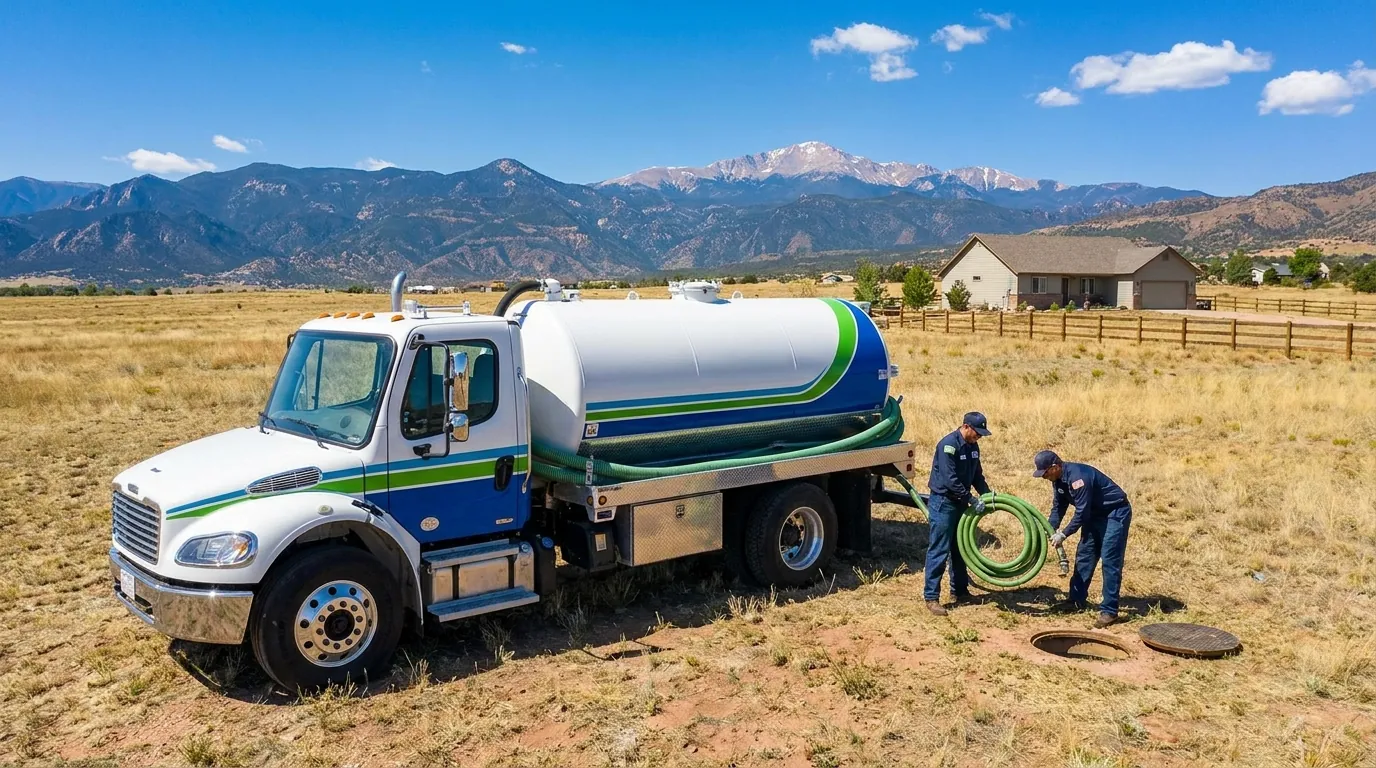
Septic care in the Ute Pass mountains
Cascade-Chipita Park sits west of Colorado Springs in the mountains along Ute Pass, where the ground climbs steeply, bedrock is shallow, and the growing season is short. Nearly everything up here runs on septic, and the mountain terrain makes these among the more demanding systems we service in the area. Steep grades, rocky soil, and tight, wooded lots all shape how a system is built and how it must be maintained.
Shallow bedrock limits how deep a drain field can go, which often means a smaller or shallower absorption area than a flatland home would have. That reduced margin makes routine septic tank pumping especially important — an overdue tank overwhelms a small field quickly, and repairs in rock are far more involved than on open ground.
Cold, rock, and seasonal use
Winters are longer and colder at this elevation, and the freeze-thaw cycle is severe. Shallow lines and tanks are vulnerable to freezing, and a system that sees light winter use — as many second homes and cabins here do — can be slow to recover in spring. Timing service for the accessible months matters, because heavy snow and steep drives can block a truck through much of winter.
If your property is used seasonally, a septic system inspection before and after the off-season is a sound habit, and pumping ahead of a period of heavy use keeps the tank from overflowing when a full house arrives. For any sudden backup we offer septic emergency service as access allows.
Schedule mountain septic service
Tell us about your access, grade, and whether the home is used seasonally, and we will plan a visit that fits the terrain and the season.
Serving Cascade-Chipita Park and the Ute Pass corridor.
Frequently asked questions
Does shallow bedrock affect my mountain septic system?
Yes. Rock limits how deep a drain field can be built, so absorption areas up here are often smaller and less forgiving. Keeping the tank pumped protects that limited field from being overwhelmed.
When is the best time to pump a Cascade-Chipita Park system?
Schedule during the accessible warmer months. Heavy snow and steep drives can block service trucks in winter, so it is best to service ahead of the cold season and ahead of periods of heavy household use.
My cabin is only used part of the year. How does that change things?
Seasonal use means the tank's bacterial activity slows during vacancy, and a system can be slow to recover. Pumping before a busy stretch and inspecting around the off-season both help avoid surprises.