Grease Trap Pumping in Colorado Springs
Grease trap pumping in Colorado Springs for restaurants and food service. Keep grease out of the septic system and avoid backups and odors.
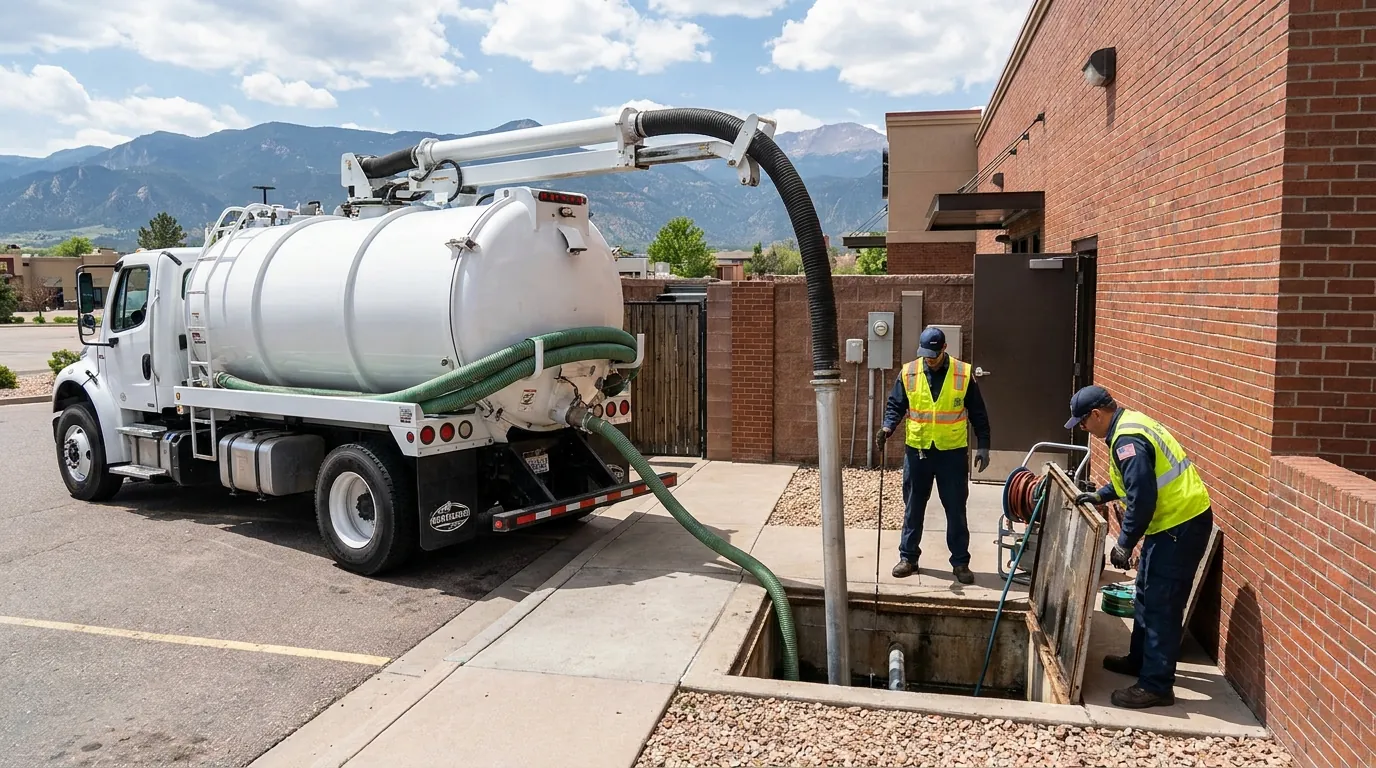
Why grease traps need regular pumping
A grease trap catches fats, oils, and grease from kitchen wastewater before they reach the septic system or sewer. Grease that gets past the trap congeals as it cools, coats pipes, and packs the septic tank far faster than ordinary household waste — and in a septic system, that grease heads straight for the drain field, where it's one of the fastest ways to clog the soil. Regular pumping keeps the trap doing its job.
The signs a trap is overdue are hard to miss in a working kitchen: slow floor drains, a strong sour odor near the sink or trap, and grease backing up at the lowest drain. Waiting until that happens risks a backup during service hours. For food businesses that share a property with a septic system, staying ahead of grease also protects the tank and field — the same solids-control logic behind routine septic tank pumping applies with grease multiplied.
What a grease trap service involves
Grease trap pumping is straightforward but needs to be thorough and on a schedule.
-
Open and assess
We open the trap and check how full it is with grease and settled solids, and how much the buildup has hardened since the last service.
-
Pump the full contents
The entire contents — grease cap, liquid, and settled solids — are vacuumed out, not just skimmed off the top.
-
Scrape the walls and baffles
Hardened grease clings to the trap walls and baffles. Scraping it down is what actually restores capacity, since a skim-only service leaves most of the buildup behind.
-
Check inlet and outlet
We confirm the inlet and outlet are clear so wastewater flows through the trap the way it's supposed to.
-
Set the next interval
Based on how full the trap was, we recommend a service interval that fits your kitchen's volume so it doesn't back up between visits.
Local factors for food businesses
Colorado Springs and its surrounding communities — from Fountain to the neighborhoods near Fort Carson — have a steady base of restaurants and food service, many on properties that combine a commercial kitchen with a septic system rather than city sewer. On those properties grease control is doubly important: a neglected trap doesn't just clog kitchen pipes, it sends grease into a septic tank and drain field never designed to handle it.
Cooler months matter for scheduling. Grease congeals faster in cold weather, and Colorado's temperature swings mean a trap that flows fine in summer can pack up quickly once temperatures drop. Kitchens that raise their service frequency going into winter avoid the worst of it. If your property runs on septic, pairing trap service with periodic septic tank pumping and an occasional septic system inspection keeps the whole chain — trap, tank, and field — working.
Set up grease trap service
Keep your kitchen running and your septic system protected with grease trap pumping on a schedule that fits your volume. Call to arrange service in Colorado Springs.
Serving food businesses in Colorado Springs and nearby communities.
Frequently asked questions
How often should a grease trap be pumped?
It depends on your kitchen's volume and the size of the trap — busy kitchens may need service monthly, while smaller operations go longer. A good rule is to service before the grease and solids reach a quarter to a third of the trap's depth, and to increase frequency heading into cold months.
What happens if I don't pump my grease trap?
Grease overflows the trap and moves downstream, congealing in pipes and, on septic properties, packing the tank and clogging the drain field. That leads to slow drains, odors, and backups during service hours, plus a much more expensive repair than routine pumping.
Do you scrape the trap or just pump it?
We pump the full contents and scrape the hardened grease off the walls and baffles. A skim-only service leaves most of the buildup behind and shortens the time until the trap backs up again.
Why does grease matter more on a septic system?
On septic, grease that escapes the trap goes to a tank and drain field that ordinary household use already keeps busy. Grease clogs drain field soil fast, so trap service directly protects the most expensive part of the septic system.