Septic Tank Cleaning in Colorado Springs
Septic tank cleaning in Colorado Springs. More than a pump-out: removing hardened sludge and buildup that a routine vacuum leaves behind.
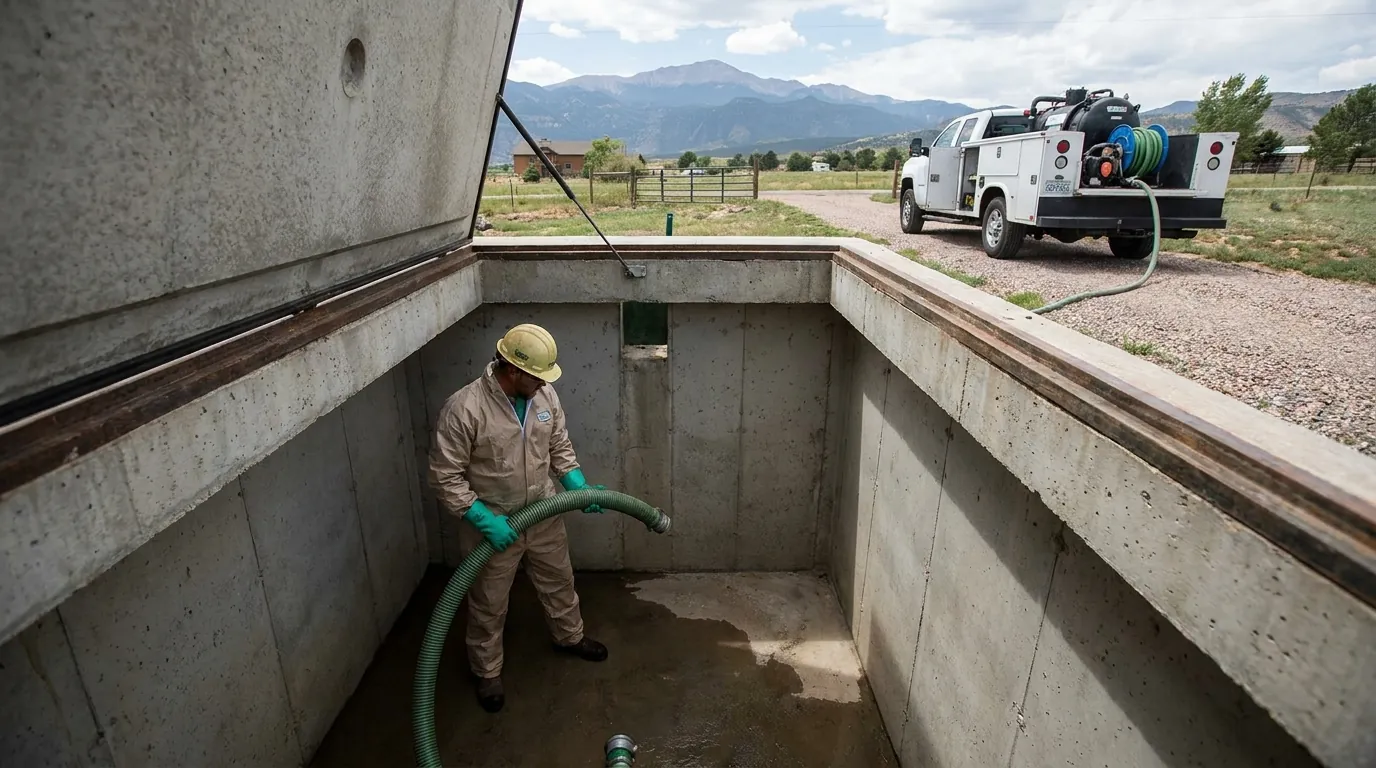
Cleaning versus pumping
People use "pumping" and "cleaning" interchangeably, but they aren't the same job. Pumping removes the liquid and the loose solids the vacuum can pull. Cleaning the septic tank goes further — it breaks up and removes the compacted sludge that settles hard against the floor and walls, plus the crusted scum mat that a hose alone won't lift. Over years, that hardened layer takes up real volume the tank needs to work.
When a tank hasn't been serviced in a long time, or has only ever been pumped from a single access point, cleaning is what restores its actual capacity. If a recent pump-out didn't fix slow drains, or the tank fills up again far sooner than it should, hardened buildup is a likely reason. Cleaning a septic tank is often paired with septic tank pumping on the same visit, and a septic system inspection beforehand shows how much buildup is really there.
How a cleaning is done
Cleaning takes more than opening a lid and running a vacuum.
-
Pump the tank down
The liquid and loose solids come out first so the interior is accessible and the hardened layers are exposed.
-
Break up compacted sludge
The settled sludge is agitated and loosened, often with water introduced back into the tank, so it can be drawn out instead of left cemented to the floor.
-
Clear the scum mat
The crusted top layer is broken up and removed. A thick scum mat can partly block the inlet and outlet, so clearing it restores proper flow.
-
Rinse and inspect the interior
With the tank clean we can see the walls, baffles, and floor clearly and flag any cracks or damage that a full tank hides.
-
Confirm the outlet is clear
We check that the path to the drain field is open so the freshly cleaned tank drains the way it should.
Why buildup is worse in this climate
Dry air and concentrated water use are part of why Colorado Springs tanks develop hard buildup. When a household's water use comes in bursts — big laundry days, weekend guests — solids get pushed and packed rather than settling gently, and the sludge compacts. Long dry stretches between heavy-use days let that layer dry and harden at the edges.
Expansive Front Range clay adds to it. A tank that's shifted slightly on swelling soil can hold sludge unevenly, so it piles deeper on one side than a routine pump reaches. Homes on well water with high mineral content also tend to build a firmer scale. If your tank keeps filling faster than the standard three-to-five-year window suggests it should, a proper cleaning usually recovers the lost capacity — and protects the drain field from the solids a crowded tank pushes downstream.
Restore your tank's capacity
If pumping alone isn't keeping up, a full cleaning removes what the vacuum leaves behind. Call to schedule septic tank cleaning in Colorado Springs.
Serving Colorado Springs and the surrounding area.
Frequently asked questions
What's the difference between pumping and cleaning a septic tank?
Pumping removes the liquid and loose solids the vacuum can reach. Cleaning goes further and removes the compacted sludge and crusted scum that a hose alone leaves behind, restoring the tank's full working volume.
How do I know if I need cleaning rather than just pumping?
If drains stay slow after a recent pump-out, or the tank fills again far sooner than expected, hardened buildup is a likely cause. An inspection that measures the layers confirms whether cleaning is worthwhile.
How often does a tank need a full cleaning?
Most tanks don't need a deep clean at every service, but tanks that have gone many years between pump-outs, or have only been serviced from one access point, benefit from one. After that, regular pumping usually keeps buildup in check.
Does cleaning damage the bacteria in the tank?
A septic tank rebuilds its bacterial activity naturally once normal use resumes, so a proper cleaning doesn't leave the system unable to work. You don't need to add commercial additives to restart it.