Drain Field Service in Colorado Springs
Drain field service in Colorado Springs. Spot a failing leach field early and learn how local clay soil and freeze-thaw affect its lifespan.
The part of the system you can't afford to lose
The drain field — also called the leach field — is where wastewater leaves the tank and filters down through the soil. It's the most expensive component to replace and the one most damaged by neglect elsewhere in the system. When solids escape a full or dirty tank, they clog the soil pores in the field, and once those pores seal off, the field can no longer absorb. That's a repair measured in thousands, not hundreds.
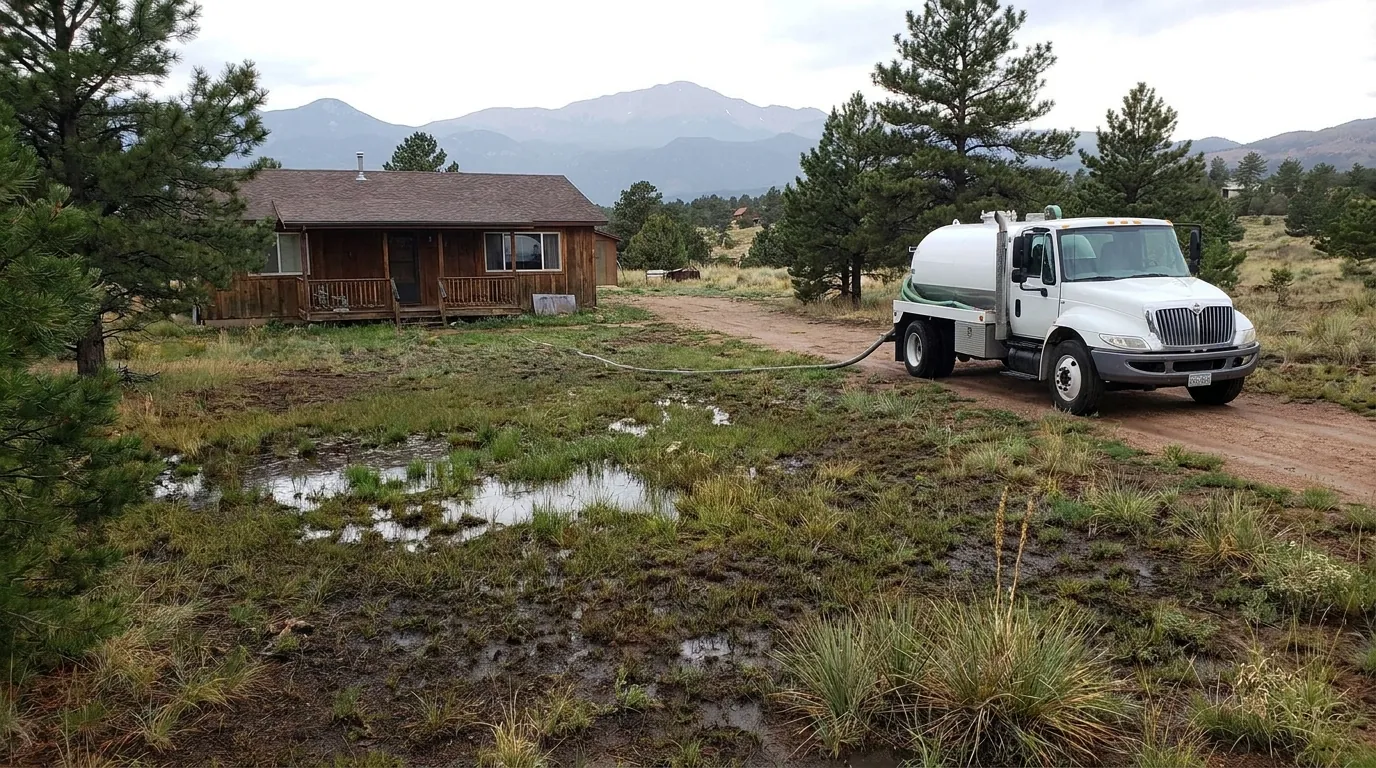
The warning signs show up in the yard. Ground over the field turns soggy or spongy underfoot with no rain to explain it. Grass grows unusually lush and dark green in strips that trace the field lines. You smell sewage outdoors. Indoors, drains slow down even though the tank was recently pumped. Any of these means wastewater isn't soaking away as it should, and the field needs attention before it fails completely.
What drain field service involves
The first job is figuring out whether the field itself is failing or something upstream is overwhelming it.
-
Rule out the tank first
A saturated field and a full tank cause similar symptoms. We confirm the tank isn't the cause with a check or a pump-out, because more field work is pointless if the real problem is upstream.
-
Inspect the field surface and lines
We look at the drainage pattern, standing water, and where the ground is softest to map how the field is behaving and which sections are struggling.
-
Relieve the load
Pumping the tank and stopping solids from reaching the field gives a stressed field the best chance to recover, especially if it hasn't fully sealed off yet.
-
Advise on next steps
Depending on what we find, that may mean reducing water load, correcting an upstream problem, or planning for repair. We'll tell you honestly what the field can and can't recover from.
How Front Range soil shapes drain field life
Soil is everything for a drain field, and Colorado Springs soil is demanding. Expansive clay along the Front Range percolates slowly — water sits in it rather than soaking away — so fields built on clay have less absorptive capacity to begin with and clog faster when solids reach them. Sandier ground toward Fountain and the lower valleys drains more freely and generally gives a field a longer, more forgiving life.
Freeze-thaw and water table add pressure. A shallow field in ground that freezes hard can stop accepting water in winter, and a high spring water table can flood a field from below, saturating soil that would otherwise absorb. Wet years expose fields that were quietly on the edge. The single best thing you can do to protect a field is keep solids out of it — that means staying on top of septic tank pumping and getting a septic system inspection at the first sign of soggy ground, rather than waiting for a full backup.
Soggy ground over your field?
Catching a struggling drain field early is the difference between a correction and a replacement. Call to have your field looked at in Colorado Springs.
Serving Colorado Springs and nearby communities.
Frequently asked questions
How do I know my drain field is failing?
Look for soggy or spongy ground over the field with no rain to explain it, strips of unusually green grass tracing the field lines, outdoor sewage odor, or slow drains that persist after the tank has been pumped. Several of these together strongly suggest the field can't absorb.
Can a failing drain field be saved?
Sometimes. A field that's stressed but not fully sealed off can recover if you relieve the load by pumping the tank and stopping solids from reaching it. A field that has fully clogged its soil usually needs repair or replacement, which is why early action matters.
Why do Colorado Springs drain fields clog faster on clay?
Expansive Front Range clay percolates slowly, so it holds less water and has less margin than sandy soil. When solids escape a neglected tank, that tight clay seals off quickly, ending the field's ability to absorb.
Does pumping the tank fix a wet drain field?
Pumping helps by removing solids and giving the field a chance to recover, but it doesn't reverse soil that has already sealed off. It's the right first step, and how the field responds afterward tells you whether more work is needed.