Septic Tank Pumping
Regular pump-outs that remove accumulated sludge and scum before they reach the drain field. The right interval depends on tank size, household load, and local soil.
Colorado Springs Septic Care
Scheduled pumping, inspections, cleaning, and drain field service for homes on septic across the Pikes Peak region.
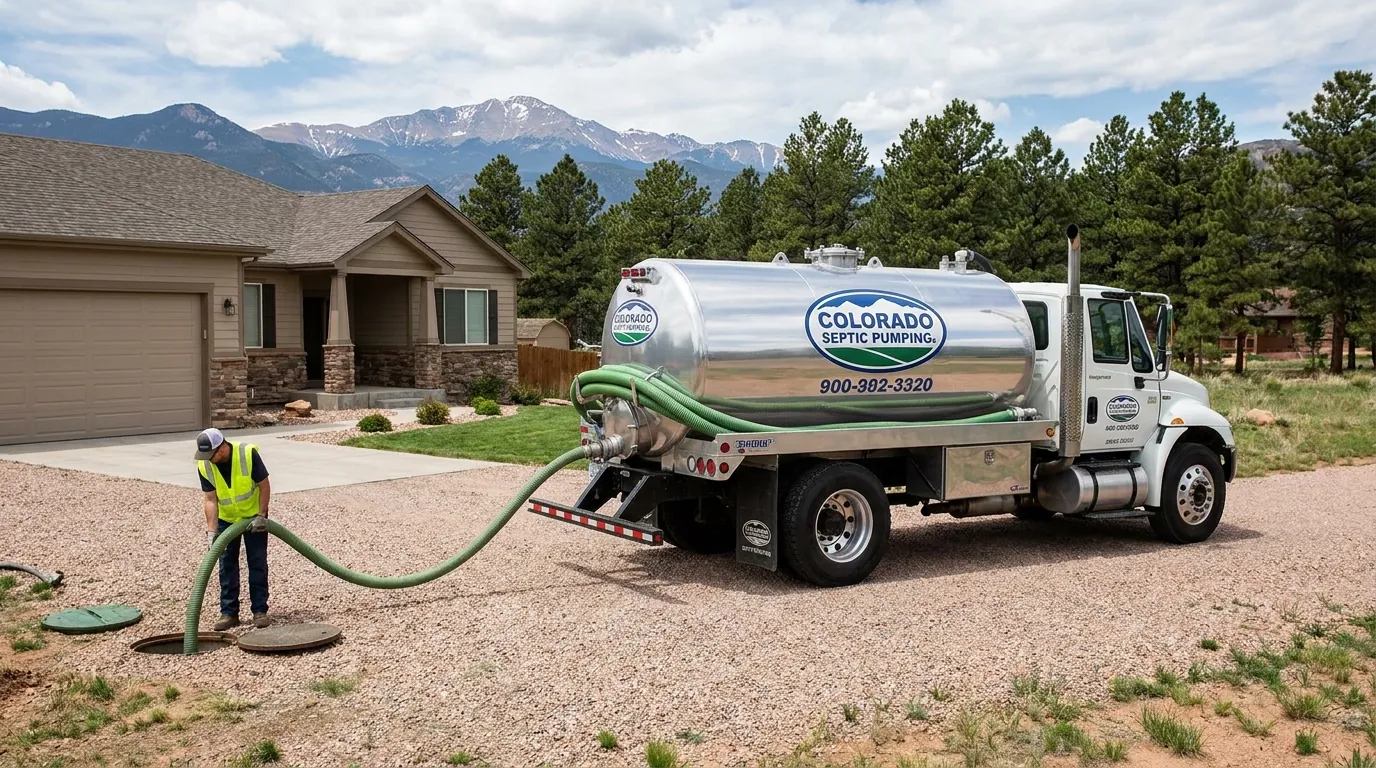
If your home sits on a septic system anywhere around Colorado Springs, you already know it is easy to forget about — right up until it reminds you. A tank that has not been pumped in too long sends warnings: slow drains, gurgling toilets, odors near the tank lid, or soggy patches over the drain field. Catching those signs early is the difference between a routine pump-out and a much larger repair. Colorado Springs Septic Care focuses on the ordinary, scheduled work that keeps a system healthy, plus the inspections and cleaning that head off trouble before it starts.
Septic performance is tied tightly to the ground it sits in, and the ground along the Front Range is not forgiving. Colorado Springs sees a wide freeze-thaw swing across a single week in winter, expansive clay soils that heave and shift, and dry air that changes how surface moisture behaves. All of that affects how fast solids build up in a tank, how well a drain field can accept effluent, and when a system needs attention. We plan our work around those realities rather than treating every property the same.
We serve homes in Colorado Springs and the surrounding communities, from higher-elevation lots near Cascade-Chipita Park to the rural acreage of Black Forest and the neighborhoods around Security-Widefield and Fountain. Whether you are due for routine septic tank pumping or trying to figure out why a fixture is backing up, we can walk you through what is happening and what your options are.
A septic system is only as good as the soil it drains into, and around Colorado Springs that soil varies dramatically over short distances. Many neighborhoods sit on expansive clay that swells when wet and shrinks when dry. That movement stresses tank inlets and outlets, can crack older concrete tanks, and slows the rate at which a drain field accepts water. Where clay dominates, effluent moves more slowly through the ground, so tanks that are overdue for pumping push solids into the field faster than on a sandy lot — and a clogged field is far more expensive to fix than a scheduled pump.
Winter here brings sharp freeze-thaw cycles. A stretch of warm afternoons followed by hard overnight freezes lifts and settles the ground repeatedly, and shallow lines or an uninsulated tank lid can freeze in a cold snap. Systems that are already sluggish are the ones that fail first in January. In the higher, wooded ground toward Cascade-Chipita Park, frost sits in the soil longer and snowmelt can saturate a field in spring, while lower elevations around Fountain thaw sooner but can flood a field during a fast melt.
The region's dry air and intense sun do their own work at the surface. Long dry spells followed by heavy summer downpours mean a drain field can go from parched to saturated in an afternoon. When the ground is already full of water, it cannot accept much more, and a system that would run fine in June can surface after a July storm. Knowing when your system was last pumped, and having a realistic inspection on record, is the best protection against those seasonal extremes. If you are unsure where your system stands, a septic system inspection is a sensible first step.
Straightforward septic services for homeowners, priced by the work the system actually needs.
Regular pump-outs that remove accumulated sludge and scum before they reach the drain field. The right interval depends on tank size, household load, and local soil.
A close look at tank condition, baffles, liquid levels, and drain field function — useful before a home sale or when something is not draining right.
More thorough than a standard pump, cleaning removes hardened solids and buildup so the tank returns to its full working volume.
Assessment and care for the field that disperses effluent into the soil — the part of the system most affected by saturated or expansive ground.
Pumping and cleaning of grease traps for homes and small kitchens so fats and oils do not migrate into the tank and field.
Help when a tank is backing up into the house or overflowing at the surface — we prioritize situations that risk your home or health.
Practical answers to the questions we hear most in Colorado Springs, CO.
What drives septic tank pumping cost in Colorado Springs — tank size, sludge depth, access, and local soil. What to expect before you call.
How often to pump a septic tank in Colorado Springs depends on tank size, household size, and Front Range soil. A practical schedule guide.
Slow drains, odors, wet spots, gurgling — the warning signs your septic tank is full in Colorado Springs and what each one really means.
Tell us your tank size, roughly when it was last serviced, and what you are noticing. We will help you figure out whether you need a routine pump-out, a full cleaning, or an inspection — and schedule the visit.
Call to schedule septic tank pumping in Colorado Springs and the surrounding towns.
We provide septic service across Colorado Springs and these nearby communities:
Most households fall in a three-to-five-year range, but the right interval depends on tank size, how many people use the system, and the soil on your lot. Homes on slow-draining clay often need attention sooner because a backed-up tank stresses the drain field quickly.
Slow drains throughout the house, gurgling from toilets or fixtures, odors near the tank or drain field, and unusually green or soggy grass over the field are all common early warnings. If sewage backs up indoors, treat it as urgent.
Yes. We work throughout the surrounding communities including Security-Widefield, Fort Carson, Fountain, Black Forest, Cascade-Chipita Park, and the Air Force Academy area. Reach out with your location and we will confirm scheduling.
Cost depends on tank size, how full it is, how accessible the lid is, and whether the tank needs full cleaning rather than a standard pump. We explain the pricing factors before any work so there are no surprises.
Yes. If a tank is overflowing at the surface or backing up into the home, contact us and describe what is happening. We prioritize situations that put your household or property at risk.