Septic System Inspection in Colorado Springs
Septic system inspection in Colorado Springs. Find leaks, failing baffles, and drain field problems before they become expensive septic system repair.
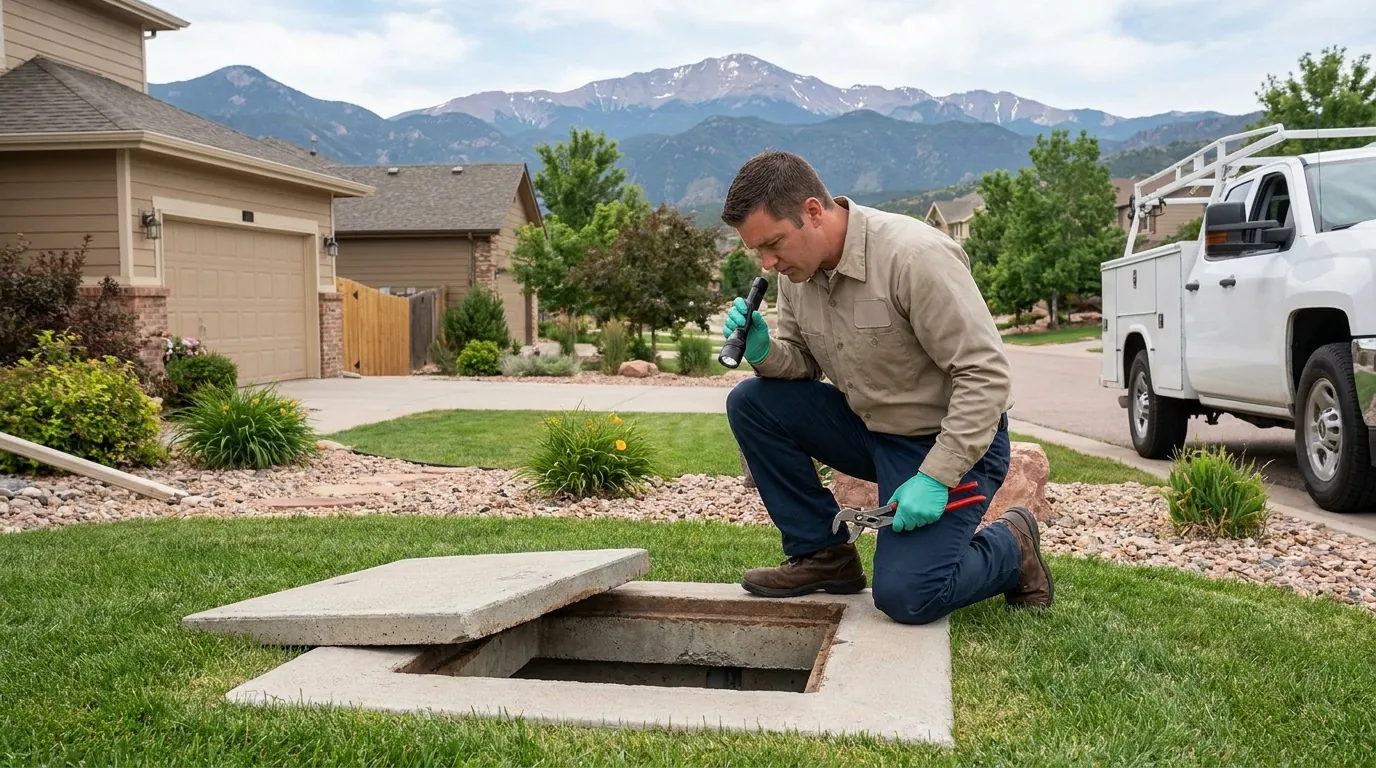
Why inspect a septic system
A septic inspection tells you what's actually happening below the yard: how full the tank is, whether the baffles that hold back scum are intact, whether the tank is watertight, and whether the drain field is accepting water or backing up. People book them for three reasons — buying or selling a home, chasing a recurring problem like slow drains or odors, or simply confirming a system is sound before committing to a long stretch between pump-outs.
The value of an inspection is that it separates a full tank from a failing system. Those look identical from inside the house — slow drains, gurgling, backups — but the fix is completely different. A full tank needs septic tank pumping. A cracked tank, a collapsed baffle, or a saturated field needs septic system repair, and catching those early is what keeps a small correction from turning into a replaced drain field.
What an inspection covers
A thorough inspection looks at the whole system, not just the tank lid.
-
Locate the system
We identify the tank, its compartments, and the direction of the drain field. On older Colorado Springs acreage the records are often missing, so locating everything accurately is the first step.
-
Measure sludge and scum
We gauge how much solid has accumulated. This shows whether the tank is due for pumping and how quickly your household loads it.
-
Check baffles and structure
The inlet and outlet baffles are inspected for damage. A failed outlet baffle lets scum flow straight to the field — one of the most common causes of premature field failure.
-
Test flow and water level
We watch how the tank handles water and where the liquid level sits. A level above the outlet, or water flowing back from the field, points to a drain field that can no longer absorb.
-
Report findings
You get a plain description of the system's condition and what, if anything, needs doing — whether that's routine pumping, a baffle repair, or a closer look at the field.
Local conditions an inspection reveals
Front Range expansive clay is hard on septic tanks over time. Soil that swells and shrinks with moisture puts pressure on tank walls and lids, and the freeze-thaw cycle works cracks wider season after season. Older concrete tanks in areas like Black Forest and the rural stretches around Colorado Springs are where we most often find deteriorated baffles and seepage — problems an inspection catches before they contaminate groundwater or flood the field.
Water-table depth and soil type also determine how much life is left in a drain field. A field built on slow-draining clay ages faster than one on sandier ground, and a wet spring can expose a field that was quietly failing all along. If an inspection turns up a saturated field, the next step is targeted drain field service rather than more pumping, which only buys time. An inspection is the honest starting point before any of that.
Book an inspection
Buying, selling, or troubleshooting a stubborn problem? A full inspection tells you where the system stands. Call to schedule in Colorado Springs.
Inspections available across Colorado Springs and nearby communities.
Frequently asked questions
When should I get a septic inspection?
Common triggers are buying or selling a home, recurring slow drains or odors, and confirming a system's condition before a long gap between pump-outs. Many owners also inspect after an unusually wet season, when a marginal drain field is most likely to show itself.
Can an inspection tell me if I need a repair or just a pump-out?
Yes — that's the main point of it. A full tank and a failing system cause the same symptoms indoors, but the fix differs entirely. Measuring the layers, checking the baffles, and testing flow separates a simple pump-out from a repair.
What problems are most common in older Colorado Springs systems?
Deteriorated concrete, failed outlet baffles, and settling from expansive clay show up regularly on older acreage. Freeze-thaw widens existing cracks over the years, so tanks that were fine a decade ago can develop leaks.
Does an inspection include pumping?
Not automatically. Some inspections are done at the current level, and others are paired with a pump-out so the tank interior can be seen clearly. We'll tell you which makes sense for your situation before the visit.