Septic Tank Pumping in Colorado Springs
Septic tank pumping service in Colorado Springs. Learn the warning signs, what pumping involves, and how local soil and freeze-thaw affect the schedule.
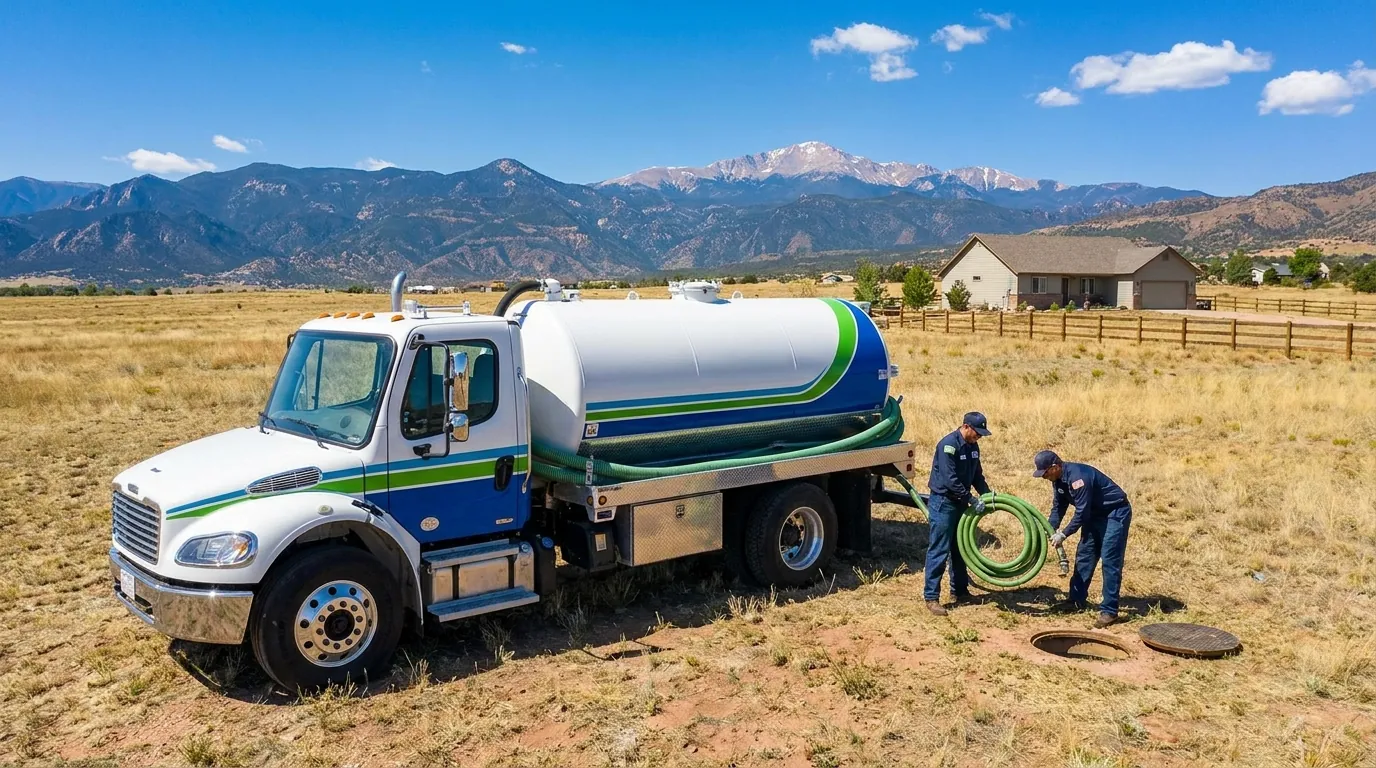
When a tank needs pumping
Every septic tank slowly fills with two layers the system can't break down: a sludge layer of solids on the bottom and a scum layer of grease and lighter material on top. Pumping removes both so the tank keeps enough working volume for wastewater to separate properly before it moves out to the drain field. Skip it too long and solids carry into the field, where they clog the soil and cause the most expensive repair on the whole system.
The warning signs usually arrive in a predictable order. Drains and toilets slow down across the house at the same time, not just one fixture. You hear gurgling in the pipes. The lowest drains — a basement floor drain or a first-floor toilet — back up first. Outside, the grass over the tank or field grows greener and faster than the rest of the yard, or the ground turns soft and smells sour. Any of these means the tank is at or past capacity and needs attention before it forces sewage back indoors.
This page covers routine and overdue septic tank pumping. If you're not sure whether the tank is the problem, a septic system inspection measures the sludge and scum layers directly and checks the outlet baffle and field.
What the work involves
A straightforward pump-out on an accessible tank is usually a single visit.
-
Locate and open the tank
We find the tank and dig down to the access lids if they aren't already at grade. On Front Range properties with expansive clay, lids can settle unevenly, so we confirm we're opening the correct compartment before anything else.
-
Measure the layers
Before pumping, we check the depth of the sludge and scum. That reading tells you how fast your household is loading the tank and helps set a realistic schedule for next time.
-
Pump both compartments
The truck's vacuum hose removes the full liquid and solid contents. On two-compartment tanks, both sides are pumped — leaving the second compartment full is a common shortcut that shortens the interval.
-
Inspect while it's empty
With the tank drained we look at the inlet and outlet baffles, the walls for cracks, and whether liquid is backing in from the drain field, which points to a field problem rather than a full tank.
-
Close and note the date
Lids are resealed and the date recorded so you know when the clock started for the next service.
How Colorado Springs conditions change the job
Pumping frequency is driven by how well your soil drains, and soil varies sharply around here. Much of the Front Range sits on expansive clay that swells when wet and shrinks when dry. Clay percolates slowly, so a drain field on clay has less margin for error — a tank that's allowed to overflow solids clogs that soil quickly. Sandier ground toward Fountain and the lower elevations drains faster and is more forgiving, but a full tank still ruins it.
Our freeze-thaw swing matters too. A tank pumped and left low going into a hard freeze, or a shallow line in poorly insulated ground, can freeze at the outlet. We time and handle winter pump-outs with that in mind. The dry air and long stretches without rain also mean water use is concentrated — heavy laundry and dishwashing days load the tank in bursts rather than evenly, which pushes solids toward the outlet if the tank is already near full.
Households vary, but most Colorado Springs homes land in a three-to-five-year window between pump-outs. A large family on a small tank needs it sooner; a couple in a home with a big tank can go longer. Pair pumping with periodic septic tank cleaning if buildup has hardened along the walls, and watch the drain field for the soft, wet ground that signals trouble downstream.
Schedule a pump-out
Whether you're on a routine schedule or seeing slow drains right now, we can get a truck to your property. Call to set up septic tank pumping in Colorado Springs.
Serving Colorado Springs and nearby Front Range communities.
Frequently asked questions
How much does septic tank pumping cost in Colorado Springs?
Cost depends on tank size, how much sludge has built up, and whether the lids need to be dug out or are already at grade. Overdue tanks with hardened solids take longer and cost more than a routine pump-out. We give a clear price based on your specific tank before we start.
How often should I pump my septic tank?
Most local households fall in the three-to-five-year range, but it depends on tank size and how many people use the system. Slow-draining clay soils along the Front Range leave less margin, so many homes here benefit from the shorter end of that window.
Can you pump a septic tank in winter?
Yes. We work around Colorado's freeze-thaw conditions and take care with shallow or exposed lines that can freeze. If you're planning a winter pump-out, it's best to schedule before a hard freeze sets in rather than during a backup.
Do you pump both compartments of a two-compartment tank?
Yes. Both compartments are pumped on every visit. Leaving the second compartment full is a shortcut that shortens the time until your next service and lets solids reach the outlet sooner.
What if my drains are still slow after pumping?
If drains stay slow after a pump-out, the problem is often in the drain field or a blocked outlet baffle rather than the tank itself. That's when a full inspection is worth doing to find where wastewater is backing up.